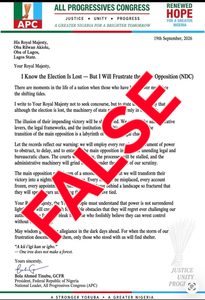
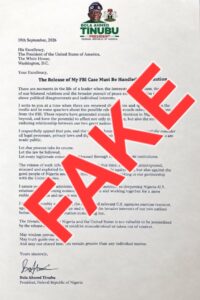
#CheckBeforeYouPost: The Olodo Uprising and Fact-Checking Trumpeters ahead of 2027 Elections in Nigeria.

By: Mayowa Adeniran & Michael Omotosho |
The popular saying …. “Look before you leap” is an English proverb that means you should think carefully about the possible consequences before taking action.
Applying that proverb to the modern political context and its dissemination need to be double-checked as we go into the 2027 general elections in Nigeria. With the Olodo Uprising content boom for digital monetization in political and civic space, it has become an endangered species in content delivery, posing a significant challenge to the country’s information ecosystem, while sensationalism increasingly becomes the currency of online conversations.
Malicious actors push disinformation for many reasons. Some are state-sponsored campaigns driven by geopolitics. Others are commercial efforts by marketing firms or informal networks fueled by ideology. But the deeper issue is systemic: today’s online platforms and business models reward attention over accuracy, creating powerful incentives for harmful content to spread.
Therefore, Fact-checking is an essential aspect of journalism, which serves to correct these information disorders of disinformation and misinformation, and acts as a mechanism through which institutions can establish and maintain credibility within democratic societies.
Why We Need Fact-Checking Trumpeters
The spread of false and misleading claims in the public sphere has gained prominence across political, social, and economic spaces, empowering social media users, handlers, etc. to bypass news media gatekeeping to directly disseminate information to the public. Recent advances in artificial intelligence (AI) are also being used to create and disseminate falsehoods. Misinformation and disinformation are everywhere, and they cut across issues from diverse political and social debates. All these are potentially harmful consequences for democratic processes and for society at large.
How then do we build a better information environment to restore trust? We believe that facts matter. That means we’re fighting for a world where we can all trust the information that shapes our lives. Media organizations, as well as organizations outside of the media sphere, have been engaging in fact-checking, which in this context refers to the journalistic activity of tracking, assessing, and reporting on the facticity of news reports, public information, and public statements, and engaging in training, capacity building, and conferences.
The awareness and movement have been growing in numbers, establishing and creating more factCheckers across all social media platforms, including Facebook, Instagram, WhatsApp, TikTok, and X. All these are in place to mitigate and correct the level of information disorder as mentioned earlier, to establish and maintain a credible mechanism within democratic societies.
For example, Nigeria’s 2023 election was marked by important disinformation campaigns, which met with the response of independent fact-checking organizations including Africa Check, Dubawa, and FactCheckHub.
The rise of the Olodo Uprising further demonstrates why fact-checking must move beyond newsrooms and become a civic responsibility. While the expression “Olodo” has traditionally been used in Nigeria to describe ignorance or poor understanding, its recent use in digital political conversations reflects a growing ecosystem where individuals with little regard for verification confidently produce political commentary, recycled narratives, manipulated visuals, and emotionally charged content that often reaches millions of users. Although not every content creator intentionally spreads falsehoods, the speed and incentives of social media mean that ignorance and misinformation can become just as harmful as deliberate disinformation.
The FIAP and Fact Check Africa Capacity Building
The workshop, titled “Truth at the Ballot: Strengthening Media and Civil Society for Democratic and Peaceful Elections in Nigeria,” was held in Lagos from 22 to 24 June 2026. The programme was implemented by FactCheckAfrica in partnership with the Fundación Internacional y para Iberoamérica de Administración y Políticas Públicas (FIAP) under the Electoral Processes and Social Governance (EPSG) Project.
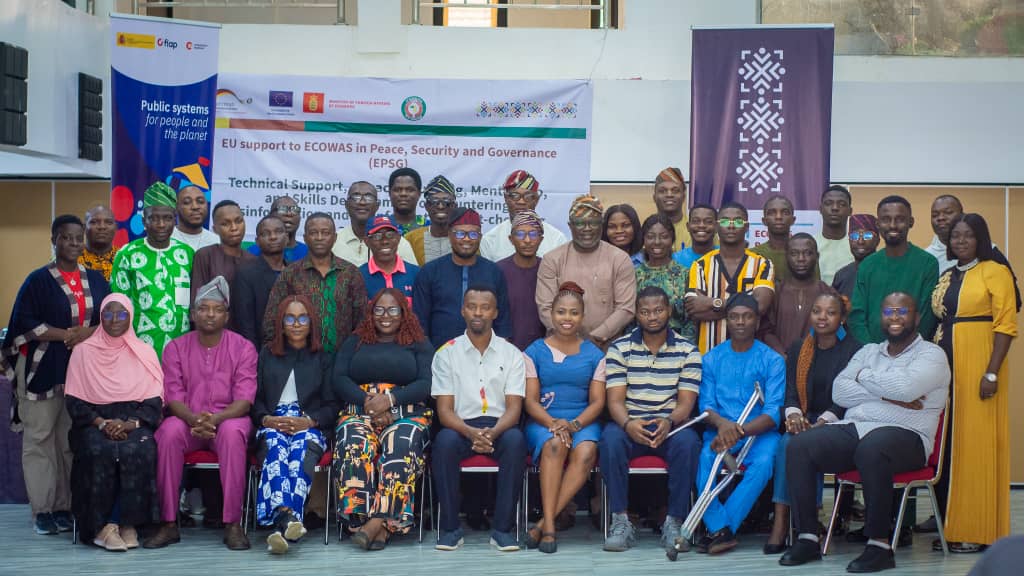
The three-day capacity-building workshop brought together journalists, fact-checkers, and civil society communicators to strengthen their ability to identify, verify, and counter electoral disinformation, misinformation, and hate speech ahead of Nigeria’s elections. Participants were equipped with practical fact-checking tools, verification workflows, and strategies for producing credible, ethical, and evidence-based election coverage.
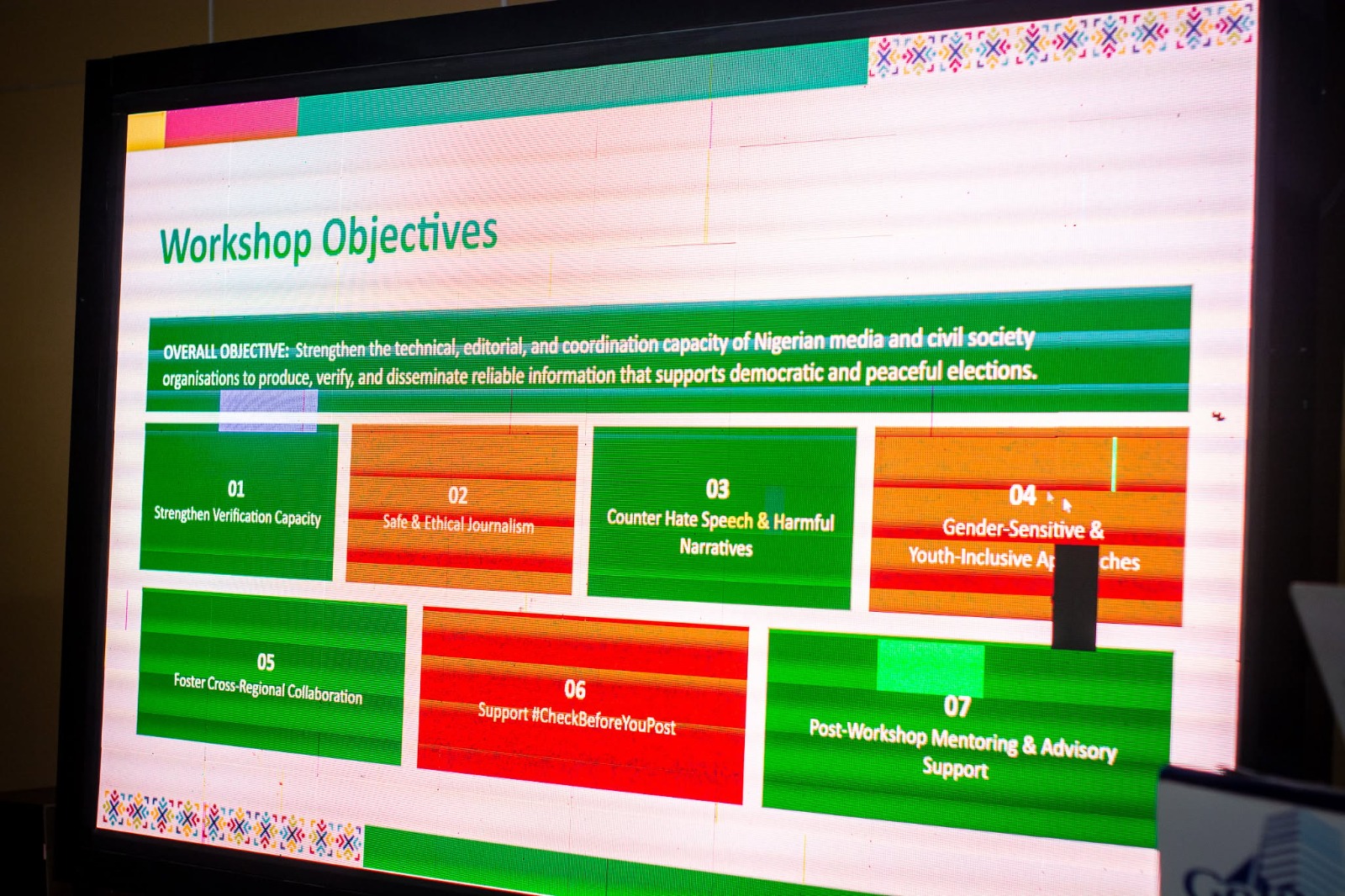
The training also focused on reporter safety, ethical standards, and protection protocols for media professionals operating in high-risk electoral environments, while promoting gender-sensitive and youth-inclusive approaches to election reporting and civic engagement. As part of the programme, participants were also supported to develop and implement #CheckBeforeYouPost public awareness campaigns in their respective states to encourage responsible information sharing, strengthen electoral integrity, and promote peaceful democratic participation.
How and why does Misinformation Spread?
Misinformation is false or inaccurate information—getting the facts wrong. Disinformation is false information that is deliberately intended to mislead—intentionally misstating the facts.
Misinformation and disinformation have an inevitable effect on the public, affecting their ability to make informed decisions and leading to a lack of trust in the media. This type of information can also lead to public panic, as well as contribute to the spread of false or harmful beliefs and practices. Despite these prevailing issues, there is still hardly enough research to address this issue with a view to finding lasting solutions to it.
Therefore, people are more likely to share misinformation when it aligns with their personal identity or social norms, when it is novel, and when it elicits strong emotions. At the same time, people do not necessarily need to believe false information to spread it; people may share information they know is false to signal their political affiliation, disparage perceived opponents, or accrue social rewards. And in this sense, it spreads differently on social media than on legacy media such as television, radio, and newspapers.
According to research conducted in 2026, Nigerian fact-checkers perceived that political interference, legal intimidation, and safety risks constitute the most significant challenges shaping their professional practice. Interview excerpts revealed that fact-checking work – particularly around elections, governance, corruption, and insecurity – often attracts scrutiny from state and non-state actors. During one of the interviews, a female respondent aged 37 stated: “Once a claim touches politics or security, you start receiving warnings, sometimes framed as “friendly advice” but clearly meant to intimidate.”
Social media is changing from social networking toentertainment, informative, and political reasons as it becomes a more integrated part of people’s everyday lives. Social media platforms are regularly linked to political participation and engagement, as well as news and information access, even if they are not particularly political places. The dissemination of inaccurate or misleading content online has drawn more attention as a result of this crowded communication landscape. This content can be shared purposefully through organized campaigns and propaganda, or it can be shared unintentionally by regular users.
Data tracks thatmost online disinformation and misinformation originate from a small minority of “superspreaders,” but social media amplifies their reach and influence.
Additionally, the monetisation of digital platforms has further accelerated this trend. On platforms such as TikTok, Facebook, X, Instagram, and YouTube, controversial political content often attracts higher engagement than carefully verified information. This has created incentives for some creators within the emerging Olodo Uprisingto prioritise speed, outrage, and entertainment over verification, making fact-checkers increasingly important as trusted voices capable of separating fact from fiction.
Why Debunking Viral Claims
According to research, elections are the heartbeat of democracy, pulsating with the collective will and aspirations of a society. At their core, elections represent more than just a mechanism to select leaders; they embody the essence of choice, a fundamental right and responsibility bestowed upon citizens. And in a democratic framework, elections serve as a conduit for the peaceful transfer of power.
Therefore, there is a need to debunk viral claims of false information because fake news frequently affects how pre-election and post-election outcomes turn out, manipulating electoral processes.
For instance, in the November 2023 gubernatorial election in Imo State, there was a video circulating that the People’s Democratic Party (PDP) candidate, Senator Samuel Nnemeka Anyanwu, had withdrawn from the election, which generated tension; he came out and debunked the news as fake.
TVC debunked having any association with the fake video clip. In the aftermath of the incident, the PDP called for the disqualification of the candidate of the All Progressive Congress (APC), Governor Hope Uzodinma, for allegedly being responsible for the circulation of the fake video.
As far as elections are concerned, political parties over the years have been using social media to spread fake news, all in the name of disparaging opposing parties. Studies show that fake news that was never verified is a key contributing factor to the violence that surrounds Nigerian elections, resulting in the loss of lives and property. Essentially, the spread of fake news was the reason for the heated environment during the Nigerian elections. On top of that, falsified election results are made and extensively shared, along with false information about political parties, candidates, and electoral authorities. When the actual results diverge from the fabricated ones, this can lead to broad-based violence. Spreading false information during elections is done with the malicious goal of sabotaging the voting process, assassinating voters, and inciting fear in the electorate.
Ahead of the Osun and 2027 Elections
During the launch of the State of Democratic Performance in Nigeria – 2025 by Kimpact Development Initiative, a civic organization based in Abuja, the findings from the State of Democratic Performance in Nigeria – 2025 offered a data-driven look at how democracy functions across Nigeria’s 36 states.
Here are some of the insights:
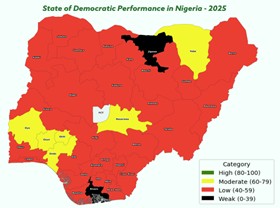
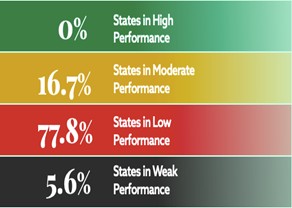
- Political inclusion is the weakest dimension, with all 36 states falling below acceptable standards.
- More than half of states operate below functional institutional standards, limiting accountability and transparency.
- Civic space remains uneven, with many states experiencing shrinking or repressed conditions.
Why We Need to Empower the “Olodo Uprising” Cluster
The term “Olodo Uprising” operates on multiple registers. At its most literal, it describes a perceived cultural shift where ignorance, particularly performative, monetized ignorance, has become a viable and even celebrated pathway to socioeconomic mobility. It also refers to the trend where creators who do not necessarily display traditional academic prowess or formal polish are achieving massive fame and financial success. By being unapologetically raw, unrefined, or even intentionally performative about their lack of formal knowledge, these creators are gaining millions of followers.
As we approach the 2027 general elections, this “Olodo Uprising” ecosystem presents a dual-edged sword. On one hand, it represents a massive, highly responsive cluster of young Nigerians who command millions of eyeballs daily and shape the realities of the electorate. On the other hand, because these highly monetized channels thrive on sensationalism and rapid content consumption, they are incredibly vulnerable to being weaponized by political actors pushing sophisticated disinformation.
Empowering the “Olodo Uprising” cluster does not mean validating misinformation; rather, it means actively engaging them with media and information literacy, fact-checking skills, and ethical content creation. Equipping these digital voices with simple verification techniques can significantly reduce the spread of false narratives while encouraging responsible civic participation ahead of the 2027 elections as a defensive shield for democracy.
The objective is not to silence opinions but to ensure that public conversations are driven by evidence rather than manipulation. Every Nigerian with a smartphone has become both a consumer and a publisher of information, making fact-checking a shared responsibility.
DNN Fact Check is activating a nine-month Fact-Checking #CheckBeforeYouPost campaign aimed at strengthening information integrity ahead of the 2027 general elections. The initiative seeks to train journalists, student leaders, community influencers, content creators, civil society organisations, and young digital communicators on practical fact-checking techniques, responsible online behaviour, and strategies for identifying manipulated content before it spreads, using the TOOLKIT FOR SAFE JOURNALISM DURING ELECTIONS by Fact Check Africa
Building a resilient information environment ahead of Nigeria’s 2027 elections requires moving past outdated gatekeeping models and meeting the digital electorate where they actually congregate. The “Olodo Uprising” reminds us that attention is the ultimate currency in modern Nigeria. By equipping independent journalists, civil society actors, and digital creators with the resources of the #CheckBeforeYouPost movement, we can insulate democratic processes from the chaos of coordinated information disorders. The price of an unverified post is no longer just a retraction; it is the very peace and stability of the nation.
This was produced with support from Fact Check Africa in collaboration with FIAP.
#CheckBeforeYouPost #TruthAtTheBallot #EPSGProject #InformationIntegrity
About The Author