#CheckBeforeYouPost | Protecting Truth in Nigeria’s AI-Powered Information Age

By Michael Omotosho |
“In the age of AI, thinking before posting is just as important as thinking before speaking.”
This simple statement captures one of the defining responsibilities of our digital age. Every day, millions of Nigerians scroll through WhatsApp messages, Facebook posts, TikTok videos, X threads, and AI-generated responses before deciding what to believe and often, what to share. In today’s interconnected world, a single tap on the “Share” or “Forward” button can amplify the truth or spread falsehood to thousands of people within minutes.
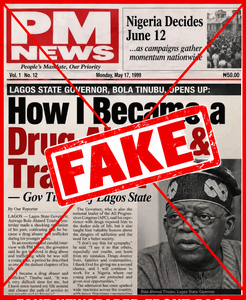
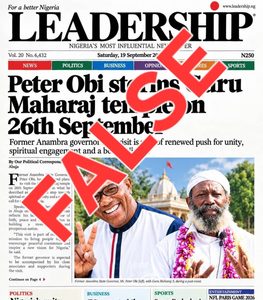
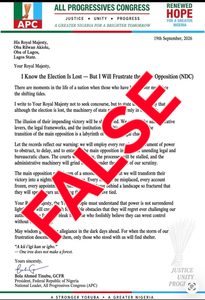
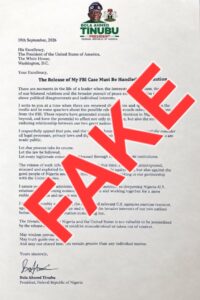
Artificial intelligence has made creating and accessing information easier than ever before, but it has also made misinformation faster, more convincing and increasingly difficult to detect. Deepfake videos, AI-generated images, cloned voices and fabricated stories can now circulate widely before journalists, fact-checkers or public institutions have the opportunity to verify them.
That is why #CheckBeforeYouPost is more than a catchy hashtag or a social media campaign. It is a call to action for every Nigerian to pause, verify and think critically before sharing information online. In an era where anyone can create content and everyone can distribute it, protecting truth is no longer the responsibility of journalists alone it is a shared civic duty that strengthens public trust, safeguards democracy and promotes a healthier information ecosystem.
The AI Revolution Has Changed the Information Landscape
Artificial intelligence is transforming how information is created, consumed and distributed. News stories can now be summarised in seconds, images generated from simple text prompts, voices cloned with remarkable accuracy, and realistic videos produced without a camera ever being switched on.
While these innovations have expanded opportunities for creativity, education and communication, they have also lowered the barriers to producing convincing falsehoods. Today, virtually anyone with internet access can create content capable of misleading thousands of people.
The result is an information ecosystem where speed often takes precedence over accuracy, virality is rewarded more than verification, and traditional editorial gatekeeping has significantly weakened. In this environment, distinguishing fact from fiction has become increasingly difficult.
From Misinformation to Information Disorder
The challenge facing today’s information ecosystem extends beyond fake news. Experts now describe the problem as information disorder a broad framework that examines how false or harmful information is created, shared and consumed.
Misinformation refers to false information shared without the intention to deceive. Disinformation involves deliberately fabricated or manipulated content designed to mislead audiences, while malinformation consists of genuine information shared to cause harm, typically by exposing private or sensitive details out of context.
Understanding these distinctions matters because the same piece of content can have different consequences depending on who created it, why it was produced and how it spreads.
Why Fact-Checking Matters More Than Ever
The consequences of misinformation are no longer theoretical. Around the world, false information has undermined public health campaigns, fuelled ethnic tensions, distorted election conversations and weakened public trust in institutions.
Research has consistently shown that false information spreads faster on social media than verified facts, largely because sensational claims provoke stronger emotional reactions. Unfortunately, corrections rarely travel as far or as quickly as the original falsehood.
For journalism, credibility remains its greatest asset. Every inaccurate report, manipulated image or misleading headline erodes public confidence. Fact-checking therefore is not an optional journalistic exercise; it is one of the profession’s most essential responsibilities.
How Professional Fact-Checkers Verify Information
Professional fact-checking follows a systematic process designed to establish the truth before publication.
The process begins by identifying the exact claim being made and understanding its context. Fact-checkers then trace the source to determine who first published the information and whether that source is credible.
Claims are verified using official records, government data, primary documents, expert analysis and multiple independent sources before concluding. Depending on the available evidence, a claim may be rated as true, false, misleading or unproven.
Verification extends beyond written text because those techniques come from IFCN/UNESCO verification practices. Images are examined through reverse image searches to determine when and where they first appeared, while metadata and visual clues help establish authenticity. Videos are scrutinised by extracting key frames, analysing landmarks, signage, uniforms, accents and timestamps to detect manipulation or the recycling of old footage. Audio recordings are authenticated by comparing voices, transcripts and original recordings to identify alterations or synthetic speech.
These verification techniques have become increasingly important as AI-generated content grows more sophisticated.
AI: A Powerful Tool and a Powerful Threat
Artificial intelligence presents one of journalism’s greatest paradoxes.
On one hand, AI has become a valuable assistant for journalists and fact-checkers. It can rapidly scan large volumes of online content, identify suspicious claims, translate languages, analyse datasets and flag potentially manipulated material for further review.
Nigeria has also developed innovative AI-powered verification tools. Platforms such as Dubawa Chatbot, MyAIFactChecker, Nubia by Dataphyte and ChatVE are helping journalists and citizens verify claims, analyse data and improve access to reliable information.
On the other hand, the same technology is making misinformation more convincing than ever before.
Generative AI can produce fabricated quotes, realistic images, cloned voices and highly persuasive videos capable of deceiving even experienced internet users. AI systems may also “hallucinate” by confidently generating false information or citing sources that do not exist.
For this reason, AI should never be treated as the final authority. It is a tool for verification not a substitute for it.
Human Judgment Remains Irreplaceable
Despite rapid technological advances, the final responsibility for determining what is true still rests with human beings.
Unlike machines, journalists can understand context, recognise satire, evaluate credibility, identify conflicts of interest and apply ethical judgment. They can ask difficult questions that algorithms cannot answer and appreciate cultural, political and historical nuances that AI may overlook.
The future of fact-checking is therefore not a contest between humans and artificial intelligence, but a partnership in which AI enhances speed while human expertise safeguards accuracy.
Protecting Journalism in the AI Era
The conversation about artificial intelligence is no longer limited to misinformation. It is increasingly about the future and sustainability of journalism itself.
Recognising these concerns, President Bola Tinubu recently directed the Federal Competition and Consumer Protection Commission (FCCPC) to investigate complaints against major technology companies including Meta, Alphabet, X and several generative AI platforms over alleged anti-competitive practices and the unauthorised use of Nigerian news content.
The investigation follows complaints by the Nigerian Press Organisation, which represents newspaper proprietors, journalists’ unions, broadcasters and online publishers. Among the issues under review are allegations relating to market dominance, the commercial use of copyrighted news content and the use of journalistic materials to train generative AI models without authorisation.
While the inquiry does not presume wrongdoing, it reflects a growing global debate over whether technology companies should fairly compensate publishers whose journalism contributes to AI systems and digital platforms. Countries including Australia, Canada, France and South Africa have already introduced regulatory measures or negotiated agreements aimed at protecting the economic value of news content.
The issue is significant because credible journalism depends on sustainable news organisations. If quality reporting is not adequately supported, the very information that fact-checkers rely upon becomes increasingly difficult to produce.
Building a Stronger Information Ecosystem
Protecting truth requires collaboration among journalists, technology companies, policymakers, educators and citizens.
Technology companies must invest in stronger safeguards against manipulated content while being transparent about how AI systems generate information. Governments should develop balanced policies that protect both innovation and public interest. News organisations must continue strengthening editorial standards, transparency and verification practices.
Equally important is digital literacy. Citizens should be equipped with the skills to question online information, recognise manipulation and verify claims before sharing them.
In today’s digital environment, every smartphone user is also an information gatekeeper.
Before You Share, #CheckBeforeYouPost
The simplest way to combat misinformation is to slow down before clicking “forward.”
Before sharing any content, check who originally published it, read beyond the headline, confirm the publication date, verify images using reverse image search where possible, watch complete videos rather than short edited clips, compare information with multiple credible sources, use trusted fact-checking platforms when uncertain, and never assume that AI-generated responses are automatically accurate.
Small verification habits can prevent large-scale misinformation.
Conclusion
Artificial intelligence has fundamentally reshaped the way information moves through society, and it has also accelerated the creation and spread of misinformation, making truth more difficult but more important to defend.
Technology alone cannot solve this challenge. AI can assist in detecting suspicious content, but it cannot replace critical thinking, ethical judgment or responsible journalism.
In an age where a fabricated image, cloned voice or manipulated video can circle the globe in minutes, the most powerful tool against misinformation remains remarkably simple: pause, verify and think before you share.
Because in the AI-powered information age, #CheckBeforeYouPost is more than a campaign; it is a responsibility we all share.
About The Author