N129 Million Spent, No Visible Impact: Inside the Missing Obalende Underbridge Beautification Project in Lagos
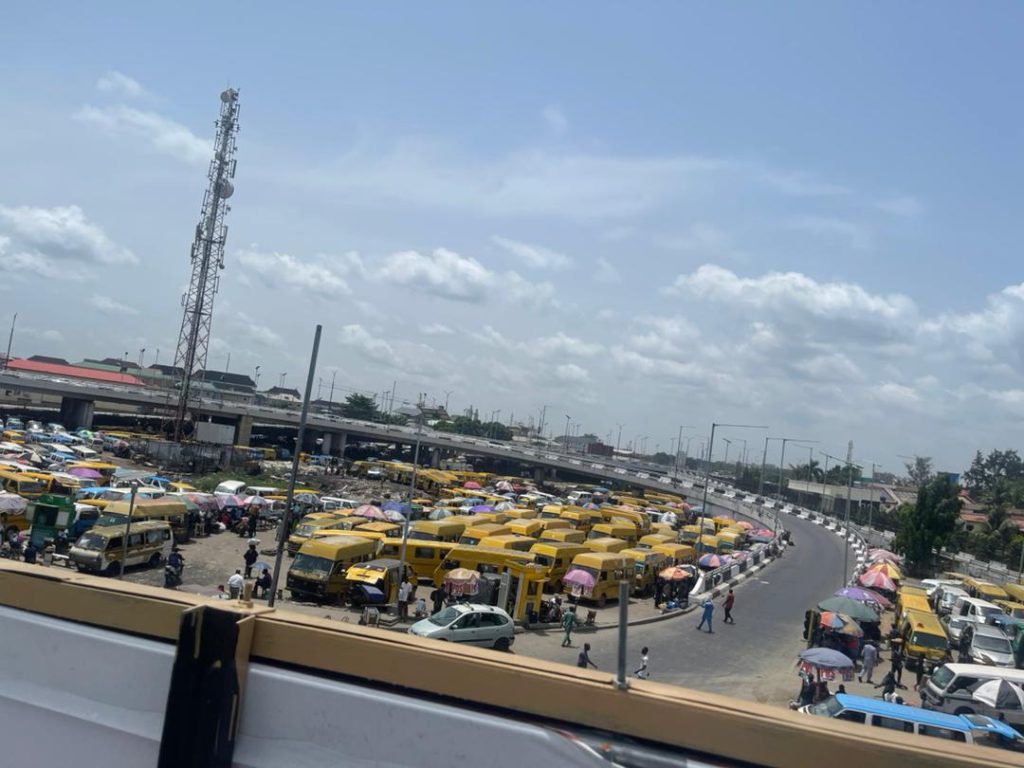
Overview of Obalende Bridge
By: Omowumi Abraham
Under the shadow of Obalende Bridge, the morning rush begins with urgency. Buses edge into narrow spaces, their engines idling as conductors lean out, calling destinations one after another CMS, Marina, Lekki, each shout competing with the constant roar of traffic overhead. Commuters move carefully through the crowd, stepping around pools of murky water that have gathered beneath damaged drainage channels.
The air carries a mix of exhaust fumes and a sharp, sour smell rising from a nearby clogged canal, where wastewater slowly moves through layers of refuse. Not far from the bus park, wooden planks and tarpaulin sheets form temporary sleeping spaces pressed against the concrete pillars of the bridge.
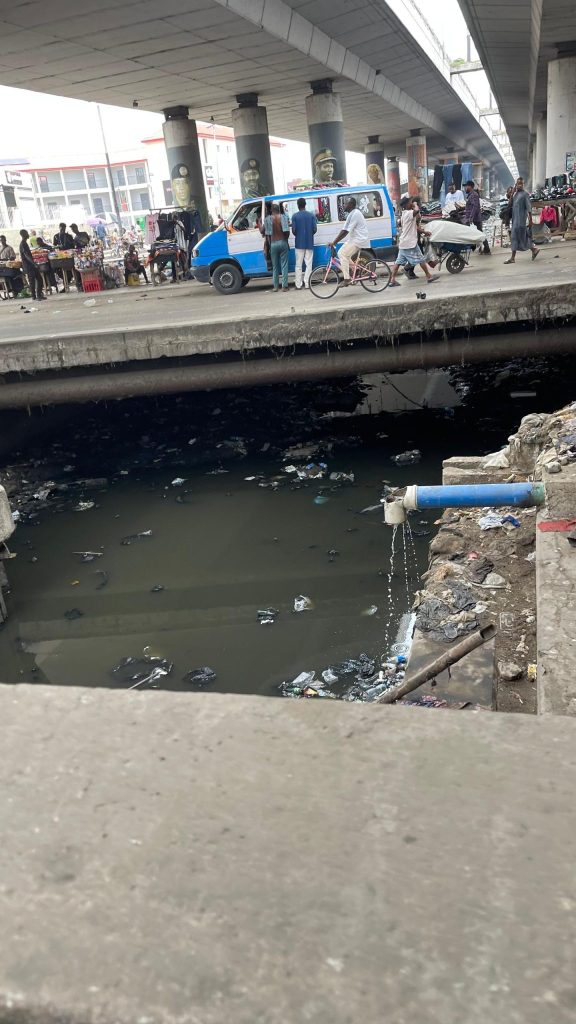
For those who pass through Obalende daily, the scene is familiar, almost expected.
But official records tell a different story.
In 2025, the Lagos State Government disbursed about ₦129 million for the landscaping and beautification of this same underbridge bus park, an intervention intended to improve sanitation, organise the space, and bring a measure of order to one of the city’s busiest transit points.
Months after the funds were released, repeated visits to the site show little to suggest that such a project ever took place.
What the Budget Reveals
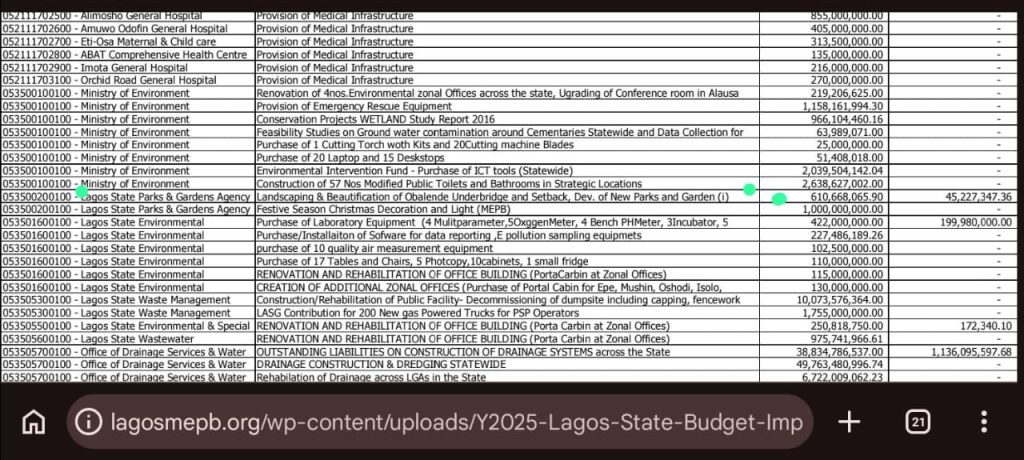
Records from the Lagos State Ministry of Budget and Economic Planning indicate that ₦194.2 million was allocated for a project described as the landscaping and beautification of the Obalende underbridge and its surrounding setback, alongside the development of parks and green areas.
By the close of the 2025 fiscal year, approximately ₦129 million had already been disbursed.
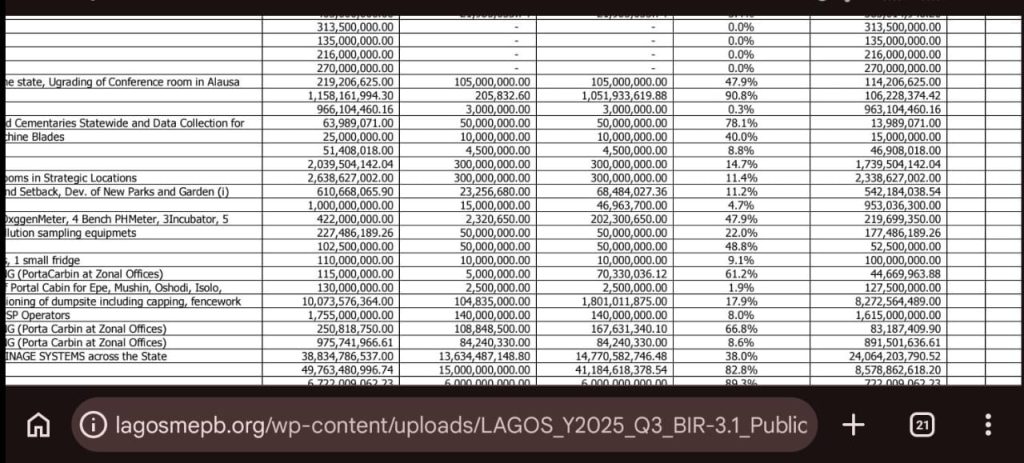
Financial records show that ₦23.256 million was released during the third quarter, followed by ₦60.55 million in the fourth quarter. Earlier in the year, a substantial portion had also been spent, bringing the total disbursement to the reported figure.
The project was linked to agencies including the Lagos State Parks and Gardens Agency (LASPARK) and the Ministry of Environment and Water Resources, both of which are responsible for managing public spaces and environmental infrastructure across the state.
However, beyond these figures, there is little clarity.
There are no publicly available details outlining what specific work was carried out, which contractors handled the project, or whether the work was completed in phases or abandoned midway. There is also no visible signage at the site indicating that such a project was executed, as is often the case with government-funded works.
For a project of this scale, the absence of visible outcomes raises questions that budget figures alone cannot answer.
Site Visits Show No Change
Between late February and April 2026, this reporter visited the Obalende underbridge multiple times, observing activity during peak and off-peak hours.
Across these visits, the condition of the bus park remained largely unchanged.
Drainage channels remain clogged with waste, trapping stagnant water that collects along the edges of the park. The ground is uneven in several places, forcing commuters to navigate carefully, especially after rainfall. There are no signs of structured landscaping, no defined walkways, and no visible attempt at reorganisation of the space.
For traders and drivers who rely on the park for their daily livelihood, the claim that over ₦100 million was spent on the area is difficult to reconcile with what they see.
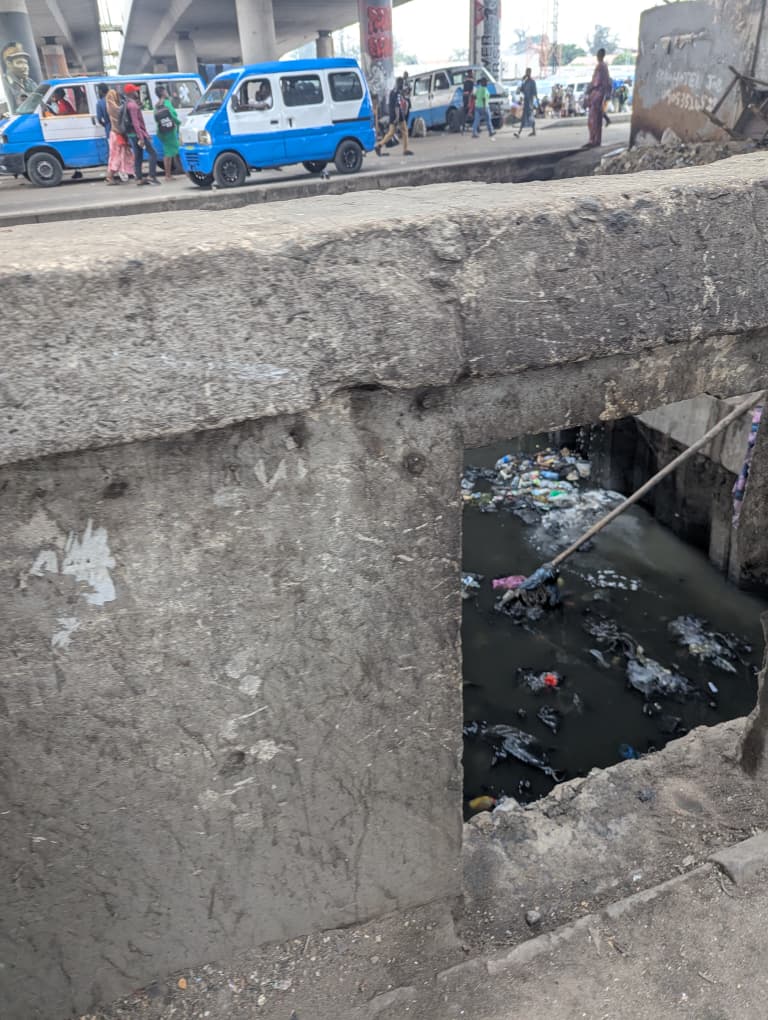
Muyibat Kareem, who sells cooked food near the bus stop, said she has not noticed any form of improvement.
“We are here every day,” she said. “If something like that was done, we would know. But everything is still the same.”
A driver who identified himself simply as Jimoh expressed a similar view.
“If work was done, it didn’t show,” he said, standing beside his bus as passengers boarded. “Nothing has changed here.”
Their responses reflect a shared sense of disbelief, grounded not in speculation but in daily experience.
Longstanding Discussions, No Visible Progress Yet
For transport workers at Obalende, discussions about improving the bus park are not new.
Saka Balogun, a commercial driver who has operated in the area for several years, said there have been repeated conversations about redevelopment, but little has materialised.
“We’ve heard about projects here before,” he said. “There were talks, even arguments at some point. But it never really moved forward.”
According to him, disagreements over who would handle such projects often slowed progress.
“The issue has always been execution,” he said. “Who is in charge, who will manage it—that has always been the problem.”
He noted that recent discussions about a new project have started circulating again, raising cautious optimism among transport workers.
“Everybody wants development,” he said. “If they bring something good, we will accept it. But what about the one they already said they did?”
For Balogun, that question remains unanswered.
Silence from Authorities
Efforts to obtain official clarification on the project revealed little.
When contacted, the General Manager of LASPARK, Mrs Adetoun Popoola, stated that the Ministry of Environment and Water Resources was responsible for the project and directed inquiries there.
“The Ministry of Environment is handling the project,” she said.
A formal letter was sent to the Commissioner for Environment requesting details about the project, including its scope, execution, and contractors. Follow-up phone calls were also made.
As of the time this report was filed, there had been no response.
The lack of official explanation leaves a gap between what is recorded in government documents and what is visible to the public.
Second Transformation Plan Emerges
While questions about the ₦129 million remain unresolved, a new redevelopment effort is already being introduced at the same location.
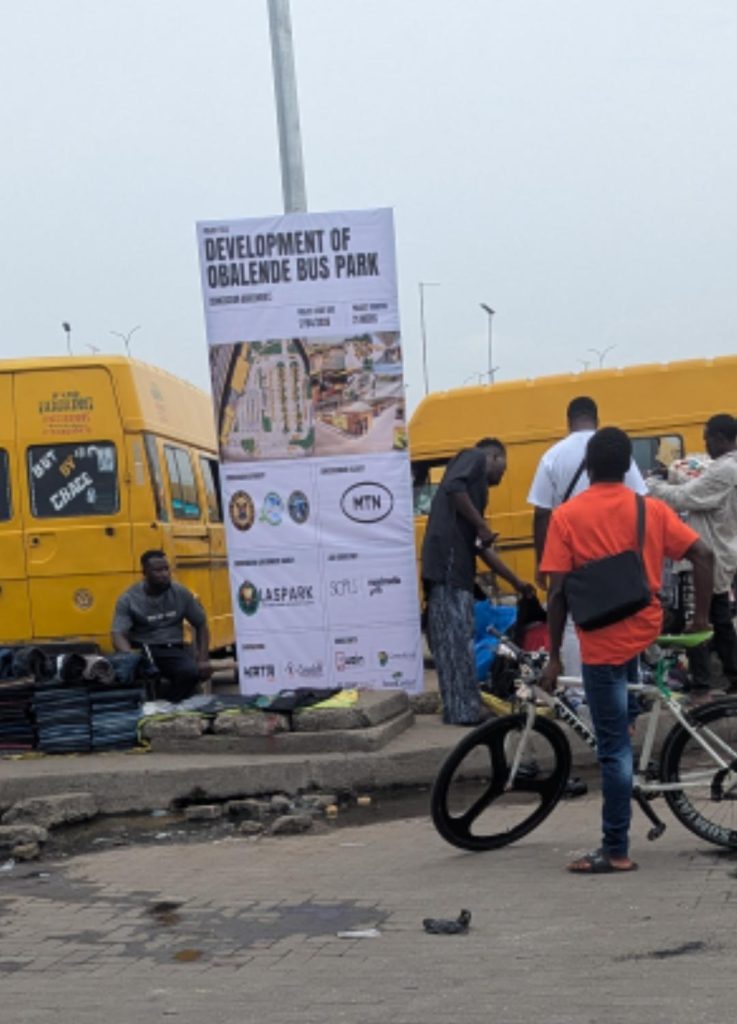
During a visit in April 2026, a banner announcing the Y’ELLO Bus Park project was seen at the underbridge. The initiative, backed by MTN Nigeria, is expected to transform the Obalende bus stop into a more structured and modern transport hub.
The proposed changes include better organisation of transport activities, improved sanitation, and infrastructure designed to make the space more functional for commuters.
For many who use the park, the proposal brings a sense of hope.
But it also raises an important concern.
If a significant amount of public funds was recently spent on beautifying the same location, why is another transformation project now being introduced?
The overlap between past expenditure and new plans adds another layer to an already unclear situation.
Daily Conditions Remain Harsh
Beyond the questions of funding and project execution, the everyday reality at Obalende Bridge tells a different story, one of persistent environmental and public health challenges that have remained largely unchanged.
Wastewater continues to collect in blocked drainage channels beneath the bridge, mixing with refuse and producing a strong, lingering smell that hangs in the air throughout the day. Traders still operate in close proximity to these conditions, arranging food and goods along the edges of the bus park, while commuters wait just a few steps away for buses moving through the crowded space.
When rainfall comes, the situation worsens. Water gathers quickly in low-lying sections of the park, slowing movement and forcing both pedestrians and vehicles to navigate carefully through flooded and uneven ground. The drainage system, already overwhelmed, struggles to cope even with moderate downpours, raising concerns about hygiene and possible exposure to contaminated water.
A police officer stationed nearby, who requested anonymity, said the conditions reflect deeper environmental neglect that cannot be solved by beautification alone.
“Before any beautification, the place needs proper cleaning and drainage work,” he said. “That is the real issue here.”
Along certain parts of the underbridge, informal sleeping spots and temporary structures can still be seen, where some individuals rest or keep their belongings.
For those who use the space in this way, it serves as a place of survival amid the daily movement of the city, exposing them to difficult environmental conditions.
For many who pass through Obalende every day, these realities stand in sharp contrast to official records that suggest significant public investment in improving the area.
Between Records and Reality
At the centre of the situation is a simple but important question: what did the ₦129 million achieve?
On paper, the funds were released for a defined purpose. In reality, there is little visible evidence to match that spending.
Without clear communication from the responsible authorities, it remains difficult to determine whether the project was carried out, partially executed, or never implemented at all.
As plans for a new redevelopment move forward, the absence of answers about the previous expenditure continues to cast doubt over the process.
For those who pass through Obalende each day, the concern is not just about figures in a budget, but about the conditions they navigate daily.
Until there is clarity, the gap between official records and lived experience remains.
And beneath the bridge, life goes on much the same way it always has.
This report was produced with support from Civic Media Lab.
About The Author