ANALYSIS: 123 Women Seek Senate Seats in 2027, But the Gender Gap Remains Wide
By: Peter Emmanuel |
The 2027 Senate race will have more women on the ballot than the last election, but the final list released by the Independent National Electoral Commission (INEC) shows that men still dominate the contest for Nigeria’s 109 senatorial seats.
In a September 15 report, ThisDay said its review of INEC’s final list showed that 1,303 candidates are contesting the 109 seats, comprising 1,180 men and 123 women.
A September 13 review by Vanguard also put the number of female candidates at 123, representing roughly nine per cent of the total field. The newspaper said the list, signed by INEC Secretary Rose Oriaran-Anthony, covers candidates from 22 political parties across the 36 states and the Federal Capital Territory.

The figures mean that women make up about 9.4 per cent of the candidates, while men account for about 90.6 per cent.
The increase is worth examining because the number of women contesting Senate seats has gone up from the previous election. But the larger question is whether more women on the ballot will lead to more women in the Senate after the votes are counted.
The 2027 contest will produce the 11th National Assembly, and the final candidate list now provides a clearer picture of where women are contesting, which parties are backing them and the political battles they face before they can increase their presence in the chamber.
More Women Are Contesting, But the Increase Is Still Modest
According to INEC’s 2023 election briefing, 92 women were among the 1,101 candidates who contested the 109 Senate seats in the 2023 election.
The 2027 figure therefore represents an increase of 31 female candidates, from 92 to 123.
There is, however, a numerical issue in INEC’s 2023 table that needs to be stated clearly. The commission recorded 92 women and 1,101 total Senate candidates, but its table gave women a percentage of 12.3 per cent. The actual calculation is about 8.4 per cent.
That means the comparable share has moved from about 8.4 per cent in 2023 to 9.4 per cent in 2027. The number of women has increased, but they remain a small minority of the total field.
More importantly, the 2023 result showed that getting onto the ballot did not necessarily translate into winning a seat.
A March 2023 report by Nairametrics said only three of the 92 female Senate candidates won their elections. They were Ireti Kingibe of the Labour Party in the FCT, Ipalibo Banigo of the Peoples Democratic Party in Rivers West and Idiat Adebule of the All Progressives Congress in Lagos West.
The European Union Election Observation Mission reached the same broad conclusion in its final report on the 2023 elections, saying only three women were elected to the Senate, down from seven in 2019.
That history gives the 2027 figure some context. The country has moved from 92 women seeking Senate seats to 123, but the more important test will be how many survive the individual contests and eventually take their seats in the 11th Senate.
The Battle for a Senate Seat Starts With the Party Ticket
The final candidate list only captures the women who made it through the nomination process. It does not show the number of women who wanted to contest but failed to secure tickets.
The NDI/IRI international election observation mission, in its report on the 2023 elections, found that women were more likely to receive nominations from smaller parties and therefore faced difficulty converting those nominations into significant political representation. The mission also said consensus-based primaries, which were often controlled by male political leaders, reduced opportunities for women to contest.
That experience remains relevant to the 2027 Senate race because the major political parties control many of the most competitive tickets.
Vanguard’s September 13 review of the final list found that the APC, which fielded 109 senatorial candidates, had only four women. The Vanguard report said the Action Democratic Party and Allied Peoples Movement each had 11 female candidates, while the Peoples Redemption Party and Youth Party had none.
The figures do not by themselves establish why the parties have different numbers of female candidates. Smaller parties contest in different political circumstances from the major parties, while their candidates may also face a different level of competition at the general election.
But the difference is significant when examining the route women must take to reach the Senate.
A woman who secures a ticket from a smaller party has crossed one hurdle, but she may still be competing against a candidate backed by a major party with a stronger political structure in the constituency.
The NDI/IRI report described the broader problem as involving structural and societal barriers to women’s participation in Nigeria’s traditionally male-dominated political space.
This means the 123 women on the final list represent only the visible end of a much longer political process. Before they appeared on INEC’s list, each had to navigate her party’s nomination system and emerge as the candidate.
Some States Have Several Women, Others Have None
The distribution of the 123 women also shows that the gender gap varies sharply from one part of the country to another.
In its September 13 review of the INEC list, Vanguard reported that Akwa Ibom has the highest number of female senatorial candidates, with 10, while Rivers, Kwara and Osun have seven each. Anambra, Enugu and Bayelsa each have six.
At the other end, Vanguard found that Jigawa, Nasarawa, Niger and Yobe have no female Senate candidate on the 2027 final list.
The difference means the national nine-per-cent figure does not describe the experience of voters in every state.
In Akwa Ibom, voters will encounter several women contesting Senate seats across the state’s senatorial districts. In Jigawa, Nasarawa, Niger and Yobe, no woman can emerge as senator from the 2027 election because none is on the ballot.
The situation has changed somewhat from 2023, but the pattern of states without female Senate candidates is not new.
The NDI/IRI 2023 election report recorded Kano, Sokoto, Taraba, Yobe and Zamfara as states that did not field female Senate candidates in that election.
The changes from one election to another show that the gender gap is not fixed in exactly the same places. Candidates enter and leave the race, parties change their tickets and local political circumstances shift.
What remains consistent is the uneven access to the ballot.
The figures also caution against explaining the difference through one factor alone. The political strength of parties, the number of women seeking tickets, local competition and the decisions made during party nominations all influence the final list.
Familiar Names Are Among the 123 Candidates
The 2027 list includes women who already have experience in national or state politics, alongside candidates making their first attempts at securing Senate seats.
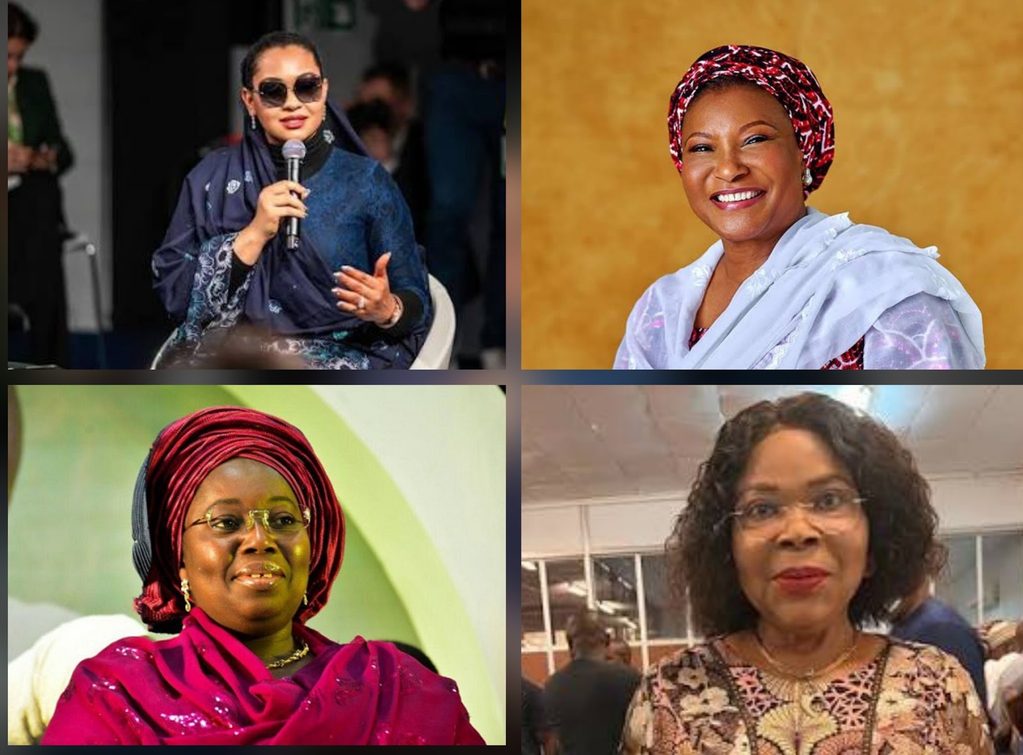
In a September 15 report, Tribune Online identified Natasha Akpoti-Uduaghan as the PDP candidate seeking re-election in Kogi Central and Ireti Kingibe as the ADC candidate for the FCT.
The newspaper also listed Iyabo Obasanjo, who is contesting Ogun Central on the PDP platform, and former Lagos deputy governor Idiat Adebule, the APC candidate for Lagos West. Former senator Nkechi Nwaogu is contesting Abia Central on the NDC platform, according to the same report.
These contests give the female field different dimensions.
For Akpoti-Uduaghan and Kingibe, for example, the election is a fight to retain Senate representation. For former office holders such as Obasanjo, Adebule and Nwaogu, the contest represents an attempt to enter or return to the chamber through the 2027 election.
Akpoti-Uduaghan’s race is also one of the more prominent contests on the final list.
ThisDay’s review of the INEC list reported that she is the PDP candidate in Kogi Central, where she is listed among 11 candidates, including former Kogi governor Yahaya Bello of the APC.
The presence of established female politicians is important because the 2027 list is not simply a collection of new aspirants. Some of the women have already built political profiles, served in elected office or previously contested national elections.
But their experience does not remove the wider electoral challenge.
The 2023 election demonstrated that even when women secure tickets, only a small number ultimately win. The three women elected in 2023 were Kingibe, Banigo and Adebule, according to Nairametrics’ review of the results.
The 2027 election will therefore test both the ability of these experienced politicians to retain or regain seats and the ability of first-time female candidates to break into the chamber.
The 2027 Contest Could Change the Senate’s Gender Balance
The final list gives women a larger starting point than they had in 2023, but it does not yet tell us how many women will enter the 11th Senate.
The difference between the two stages is crucial.
In 2023, 92 women contested and only three won. Nairametrics’ report on the election results recorded the three winners, while the EU election observation mission also put the number of elected female senators at three.
For 2027, 123 women are now confirmed candidates.
That means there are more female candidates from which voters can choose, but it does not mean there will automatically be more female senators.
The eventual outcome will depend on the individual races, the strength of the candidates and their parties, the political calculations within each constituency and the choices voters make in January 2027.
In a report by Vanguard, the INEC final list shows that the geographical spread of female candidates is uneven, with some states recording several women while Jigawa, Nasarawa, Niger and Yobe have no female candidate for the 2027 Senate election.
The party picture is similarly uneven. Vanguard reported that the APC has four female candidates despite fielding a full slate, while the ADP and APM each have 11.
Those figures do not by themselves determine women’s eventual representation in the Senate, but they show how differently female candidates are distributed across states and political parties.
The 2027 Senate election will therefore provide a clearer test than the candidate list alone. If more women win, the increase from 92 to 123 candidates will have translated into a larger presence in the chamber. If only a small number emerge, it will show that the challenge extends beyond getting women onto the ballot.
For now, the INEC list has established one clear fact: 123 women are entering the race for 109 Senate seats in 2027, but they remain a small minority in a contest dominated by male candidates.
The next stage is the campaign and, ultimately, the vote, which will determine whether the larger number of women on the ballot produces a corresponding change in the composition of the 11th Senate.
About The Author