2027: INEC List Confirms Nearly Half of 10th Senate Displaced by Outgoing Governors, Primary Election Losses, Others
By: Peter Emmanuel |
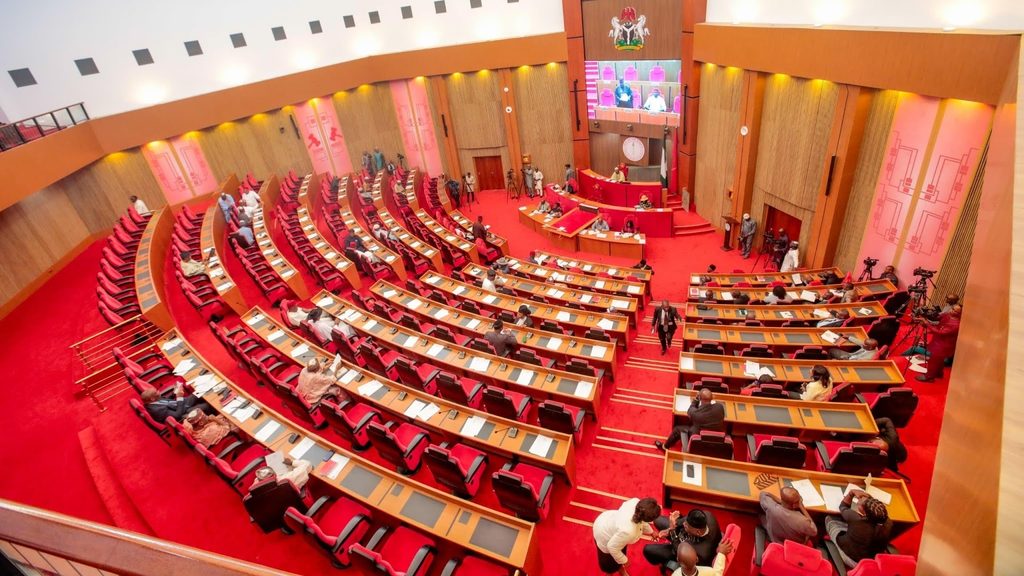
The Independent National Electoral Commission (INEC), in its final list of candidates for the 2027 National Assembly elections, has confirmed a major turnover in Nigeria’s 10th Senate, with 52 of the 109 serving senators absent from the final senatorial candidate list.
A September 14, 2026 report by Nigerian Tribune, which reviewed the final list released by INEC, found that 57 serving senators secured tickets to contest the 2027 election, while 52 will not be returning to contest their current Senate seats. The newspaper reported that the exits were caused by different circumstances, including failed primaries, governorship ambitions and political arrangements involving governors and other political actors.
The figure means that almost half of the current Senate will not be returning through the 2027 senatorial election. But the number alone does not tell the full story. The more important question is why so many serving lawmakers, many of whom have spent four years in the National Assembly, were unable to secure or retain a place on the ballot.
The answer lies largely in what happens before the general election. For an incumbent senator, the first major filter is not the voter but the political party. Before INEC can list a candidate, that politician must first navigate party screening, internal negotiations, zoning considerations and the nomination process before eventually securing a ticket.
How Primary Election Battles Displaced Sitting Senators
For a sitting senator seeking another term, the first battle is often not against the opposition at the general election but against other aspirants within the senator’s own party. Before a lawmaker can appear on the ballot, the party must first nominate that person to contest the seat. This makes the primary election a critical point at which an incumbent’s bid for re-election can succeed or end.
A May 19, 2026 report by The Guardian reported that several serving APC senators lost their return tickets during the party’s senatorial primaries. Among those defeated was Senator Ned Nwoko of Delta North, who lost to former Delta State governor Ifeanyi Okowa. Senators Neda Imasuen of Edo South and Jibrin Isah of Kogi East were also reported to have lost their respective primaries, while some other serving senators were disqualified at the screening stage.
The Delta North contest provides a clear example of how an incumbent can lose his route back to the Senate before the general election. In a May 18, 2026 report, Premium Times reported that Okowa defeated Nwoko and Maryam Ali in the APC primary, securing 113,309 votes against Nwoko’s 2,612 votes.
Nwoko later disputed the outcome. In a May 26, 2026 report, Premium Times reported that the senator accused the APC of reneging on an alleged promise to give him an automatic ticket and claimed that his camp had actually won the primary in most of the wards. Those were Nwoko’s allegations about the disputed process, while the APC’s declared result gave the ticket to Okowa.
The case demonstrates why incumbency does not automatically translate into a return ticket. A senator may have legislative experience, visibility and an established political network, but those advantages operate within a party structure in which other aspirants can challenge the incumbent for the same nomination.
The primary is therefore a major political filter. Once an incumbent loses the ticket, the contest shifts away from the general electorate. The immediate question becomes who controls the party nomination and which aspirant can obtain the platform needed to reach the general-election ballot.
Outgoing Governors’ Senate Ambitions Are Reshaping the Race for Senate Seats
The second major factor is the movement of serving governors approaching the end of their tenure into the Senate race.
For governors who cannot continue in office after completing their constitutionally permitted terms, the Senate provides one route into continued electoral politics. But when a serving governor enters a senatorial contest, the move can create a direct struggle with an incumbent senator who already occupies the seat.
A September 14, 2026 report by Nigerian Tribune identified several such cases. In Ogun East, for example, former governor and serving senator Gbenga Daniel will not return after Governor Dapo Abiodun emerged as the APC candidate for the senatorial district.
The same report said Senator Osita Izunaso would not return for Imo West after the APC ticket was ceded to Governor Hope Uzodinma. It also reported similar developments in Yobe and Gombe, where serving governors secured Senate tickets.
These cases illustrate what can happen when executive and legislative political interests collide. A sitting senator may already occupy a constituency, but a governor entering the same contest brings an established state-wide political structure and a network developed while controlling the state executive machinery.
That does not mean every governor automatically controls the party ticket. The outcome remains dependent on the particular state, party and political arrangement. But the entry of an incumbent governor into a senatorial contest can fundamentally change the balance of power confronting an incumbent senator.
This is one reason the 52 departures should not be treated simply as a list of senators who decided to leave the National Assembly. In some constituencies, the political space occupied by an incumbent was contested by a governor or another politically influential aspirant seeking the same ticket.
Power Rotation and Zoning Shape Senate Tickets
The governor factor also connects with zoning and political rotation.
Zoning is not a constitutional requirement for a Senate seat, but Nigerian political parties and political actors frequently negotiate the distribution of elective offices among geographical areas, political blocs and competing interests. Such arrangements can influence who receives support for a nomination before voters are presented with candidates.
In some states, therefore, the battle is not simply about whether an incumbent senator wants another term. It can become a negotiation over which political bloc, senatorial zone or political camp should produce the next occupant.
The effect can be particularly significant when a party or political coalition is trying to balance competing interests. An incumbent may have to negotiate not only against another individual aspirant but against a broader political argument that another zone, generation or faction should have access to the office.
A September 14, 2026 report by Nigerian Tribune cited Sokoto as an example, reporting that former governor and serving senator Aminu Waziri Tambuwal stepped aside for a younger aspirant under a power-sharing understanding within the African Democratic Congress (ADC).
The Sokoto example is important because it shows that not every incumbent missing from the INEC list was defeated in a conventional primary. Political negotiations can also determine who gets a ticket and who steps aside.
That creates a different form of displacement. Instead of an incumbent losing a direct contest, the political arrangement may produce an agreement under which another politician takes the ticket while the incumbent pursues another political objective or withdraws from the contest.
Party Crises Intensify the Senate Ticket Struggle
Internal party disputes are another factor affecting the ability of incumbent senators to secure tickets.
Political parties do not always operate as single, unified structures. Competing factions can emerge around governors, former governors, party leaders, legislators and aspirants. Disagreements over screening, primary results, candidate substitutions and control of party structures can subsequently affect who appears on the ballot.
The APC’s 2027 nomination process provides examples of how these internal processes can affect serving lawmakers. A May 19, 2026 report by The Guardian reported that some serving senators were disqualified during the screening stage and therefore could not participate in the primaries.
The problem does not necessarily end with the primary itself. Candidate substitutions and appeals can reopen disputes after a candidate has initially emerged.
For example, a July 1, 2026 report by Premium Times reported that the APC revised its National Assembly candidate list after considering recommendations from its Primary Election Appeal Committee. The party replaced 26 aspirants, including seven senatorial candidates, following petitions arising from the primaries.
This demonstrates another important stage in the process: emerging from a primary does not always end the political contest. Appeals, internal reviews and candidate-list revisions can still alter who eventually becomes the party’s nominee.
For serving senators, therefore, securing a place on the ballot involves navigating an entire chain of political and administrative processes rather than simply winning an election against a challenger.
Defections Complicate Senators’ Route Back
Defection and political realignment have also affected the 2027 Senate contests.
When a serving senator leaves one party, the politician leaves the nomination structure through which the existing Senate seat was won and enters another political organisation with its own leaders, aspirants and internal interests.
A June 23, 2026 report by Premium Times reported that Senator Garba Maidoki defected to the ADC after he was screened out of the APC’s senatorial primary process.
The case illustrates why changing political parties is not necessarily an automatic route to another ticket. The politician still has to obtain the nomination of the new party and compete within its political structure.
The situation can become even more complicated where a politician defects into a party that already has a strong aspirant for the same seat. The defector may bring an existing political base, but the new party must still resolve who receives its nomination.
Defection can therefore be both a consequence of internal party disputes and a factor that reshapes the subsequent political contest.
Some Senators Exit by Choice, Not Primary Election Loss
One of the most important distinctions in the 52 exits is that not every senator absent from the INEC list was defeated.
Some senators changed their political ambitions and chose to pursue other offices.
A September 14, 2026 report by Nigerian Tribune reported that Senator Solomon Olamilekan Adeola secured the APC governorship ticket in Ogun, meaning he would not return to the Senate to defend his current seat. The same report identified Senator Aliyu Wadada as another serving senator who moved into the governorship contest after securing the APC ticket in Nasarawa.
These cases are different from an incumbent who contested a senatorial primary and lost to another aspirant.
That distinction is important because the 52 figure describes who is absent from the 2027 senatorial ballot. It does not mean all 52 were defeated by voters, defeated at primaries or forced out of politics.
Some lost tickets. Some were displaced by other political actors. Some were affected by party arrangements. Others voluntarily changed the office they were seeking.
What the Senate Turnover Reveals About Nigerian Party Politics
The pattern emerging from the final list shows that the struggle for the National Assembly begins long before election day.
For an incumbent senator to return, several conditions must align. The politician must remain in the right political party or secure a new platform, survive screening, navigate internal party structures, secure the nomination and ultimately appear on the final INEC list.
The process also shows the importance of state-level political structures. Governors, former governors, party leaders and political blocs can become important actors in determining who competes for a ticket, particularly where multiple influential politicians are seeking the same seat.
This does not mean that every ticket is determined by governors or party leaders. Some incumbents successfully defend their seats through direct primaries or consensus arrangements. The final INEC list itself shows that 57 serving senators have secured tickets to contest again.
But the fact that 52 have not done so demonstrates how vulnerable incumbency can become when the political balance within a party changes.
How 52 Senators’ Exits Could Reshape the 11th Senate
The departure of 52 serving senators will produce significant turnover in the composition of the next Senate.
The 10th Senate contains lawmakers with experience across committees, legislative procedures, oversight functions and ongoing policy debates. Their departure means the 11th Senate will have to absorb a substantial number of new lawmakers while retaining the 57 incumbents who secured tickets.
The political composition of the next chamber will ultimately depend on the outcome of the 2027 election. The candidate list alone cannot determine which parties will control particular seats or what the eventual leadership and committee structure will look like.
What the INEC list establishes is the starting point: almost half of the current Senate will not be contesting their existing seats.
The reasons behind that turnover are more revealing. Some senators were defeated during party primaries. Some lost their political space when governors or former governors entered the contest. Others were affected by zoning, power-sharing arrangements, internal party disputes or defections. Some moved into governorship contests rather than seek another Senate term.
The 52 exits therefore provide a window into how political power is negotiated before Nigerians vote. The general election is the final stage, but for many of the senators who will not return, the decisive contest took place earlier, inside their parties and among the governors, former governors, political blocs and competing aspirants seeking control of the same political space.
About The Author